


An ultrasonic nose job is one of the most significant technical advances in rhinoplasty over the past decade, offering surgeons a more precise and controlled approach to reshaping the nasal bone. Patients considering this technique are likely weighing their options carefully and want to understand not just what the procedure involves, but how it compares to traditional rhinoplasty. Dr. Daraei aims to answer those questions directly, drawing on the clinical depth and surgical philosophy that guide every procedure at our Atlanta practice.
What Is an Ultrasonic Nose Job and How Does It Work?
Traditional rhinoplasty techniques that address the nasal bones typically rely on osteotomes, which are narrow chisels driven by a mallet, to cut and reposition bone. The ultrasonic nose job, also referred to as ultrasonic rhinoplasty or piezo rhinoplasty, uses a piezoelectric device that vibrates at an ultrasonic frequency to selectively cut bone tissue. Because the ultrasonic energy affects mineralized tissue but not soft tissue, the surrounding mucosa, periosteum, and blood vessels are less disrupted during the procedure.
The Mechanics Behind Piezoelectric Bone Work
The piezo handpiece generates precise, controlled oscillations that enable the surgeon to sculpt bone along planned vectors with a level of refinement that is difficult to achieve with conventional osteotomy instruments. This matters most in areas requiring nuanced reduction or asymmetry correction, where over-resection or an uncontrolled fracture line could compromise the final result.
Because less surrounding tissue is disturbed during an ultrasonic nose job, many patients experience reduced bruising and swelling compared to traditional approaches, though individual results may vary considerably depending on the complexity of the surgery, the patient’s healing response, and the specific maneuvers required. Downtime expectations should always be discussed in a one-on-one consultation rather than assumed from general descriptions.
Candidacy for an Ultrasonic Nose Job
Not every rhinoplasty requires bone work, and not every case that involves bone work is best suited to the ultrasonic technique. Candidacy depends on a detailed anatomical assessment, the patient’s underlying bone thickness and structure, the specific aesthetic or functional goals, and whether primary or revision surgery is being planned.
Profiles That May Be Well-Suited
Patients who may benefit from an ultrasonic nose job include those seeking reduction of a dorsal hump that has a significant bony component, correction of nasal bone asymmetry, or controlled narrowing of a wide nasal base through medial and lateral osteotomies. The added precision of the piezo device can be particularly useful when the surgeon needs to sculpt along curved or irregular bone contours.
When Traditional Techniques May Still Be Appropriate
Patients with thinner nasal bones, revision cases with scarring from prior surgery, or cases where the primary concerns are cartilaginous rather than bony may be equally well-served by conventional techniques. In our practice, we find that no single instrument is universally superior; the right tool depends entirely on the anatomy. Dr. Daraei’s training across over 3,000 surgical cases at Emory University, combined with exposure to techniques from elite surgeons nationally and internationally, informs each decision about which approach is most appropriate for the individual patient.
Patients who are not yet ready for surgery may also want to explore liquid rhinoplasty in Atlanta as a non-surgical option for minor contour refinements, with the understanding that it addresses a very different set of concerns than surgical rhinoplasty.
Recovery, Results, and Realistic Expectations
One of the most frequently cited advantages of the ultrasonic nose job is a recovery profile that may be more comfortable than traditional rhinoplasty for patients requiring significant bone work. Research and clinical observation suggest that the more tissue-selective nature of ultrasonic osteotomy may result in less perioperative bleeding, reduced bruising around the eyes, and a smoother early recovery period for many patients. That said, all rhinoplasty involves a healing process measured in months, not days, and the final result is not fully visible until swelling has resolved, which can take a year or more depending on skin thickness and surgical complexity.
What the Recovery Timeline Generally Looks Like
Most patients undergoing rhinoplasty with the ultrasonic technique can expect a splint or cast for approximately one week. Significant social downtime typically spans one to two weeks for most patients, with residual swelling present for considerably longer. Tip refinement, in particular, resolves slowly regardless of technique.
Setting Honest Expectations About Results
The goal of rhinoplasty, including the ultrasonic approach, is balance and harmony with the rest of the face, not a standardized aesthetic outcome. Dr. Daraei’s approach is oriented around results that look natural and proportionate rather than operated-upon. Patients can review before-and-after images to develop a realistic visual reference. For patients considering complementary facial rejuvenation, our practice also offers Morpheus8 for the face and other aesthetic treatments.
Why Choose Dr. Paul Daraei for an Ultrasonic Nose Job in Atlanta, GA?
Dr. Paul Daraei is a double board-certified facial plastic surgeon holding certification from both the American Board of Facial Plastic and Reconstructive Surgery and the American Board of Otolaryngology, Head and Neck Surgery. His training at Emory University encompassed more than 3,000 plastic and reconstructive surgical cases, followed by a dedicated fellowship in cosmetic facial surgery. That depth of experience, before private practice, is uncommon. His academic standing as an Affiliate Professor at Emory’s Department of Otolaryngology reflects a commitment to surgical advancement that extends beyond the operating room.
Patients throughout Atlanta and the surrounding area choose this practice because the focus is exclusively on the head and neck, meaning every instrument, every refinement, and every conversation about outcomes is grounded in that singular area of expertise. Consultations are unhurried, and honest assessments take priority over securing a booking.
Frequently Asked Questions About the Ultrasonic Nose Job
Is the ultrasonic nose job more expensive than traditional rhinoplasty?
Ultrasonic rhinoplasty often entails higher instrument costs, which may be reflected in overall surgical fees. However, the more important question is whether the technique is clinically appropriate for your anatomy, not whether it carries a premium.
Does the ultrasonic technique work for correcting bulbous tips?
A bulbous nasal tip is primarily a cartilaginous concern, and ultrasonic instruments are designed for bone work rather than cartilage refinement. Tip reshaping uses separate techniques involving the lower lateral cartilages. In some cases, a patient may need both bony dorsum work, where ultrasonic technology may be applied, and tip refinement addressed through cartilage suturing or reduction techniques, depending on anatomy.
How do I know if I need bone work as part of my rhinoplasty?
A thorough in-person evaluation is the only reliable way to assess whether your concerns involve bony anatomy, cartilaginous structure, soft tissue, or a combination. High-resolution imaging and a detailed physical examination help determine the appropriate surgical plan. Many patients assume their concern is bony when it is cartilaginous, or vice versa.
Can Atlanta-area patients combine rhinoplasty with other facial procedures?
In appropriate cases, rhinoplasty may be combined with other facial procedures when safe and surgically logical. Candidates who are also concerned about facial aging may want to explore facelift surgery as a separate option or as a potential combination. Any combination approach requires careful surgical planning and an honest conversation about the demands of recovery.
Do out-of-town patients travel to Atlanta for this procedure?
The practice welcomes patients from outside the Atlanta area who are seeking a highly specialized facial plastic surgeon. Coordination for consultations, pre-operative planning, and post-operative follow-up is available for patients traveling from other cities or states. Specific logistics, including what the process looks like for out-of-town patients, can be discussed during your initial consultation or by contacting the practice directly.
Schedule Your Ultrasonic Nose Job Consultation in Atlanta, GA
If you are considering an ultrasonic nose job in the Atlanta area and want an honest, anatomy-based assessment from a double-board-certified facial plastic surgeon with extensive rhinoplasty experience, we invite you to schedule a consultation. Dr. Daraei takes the time to understand your goals, carefully reviews your anatomy, and gives you a direct, transparent recommendation.
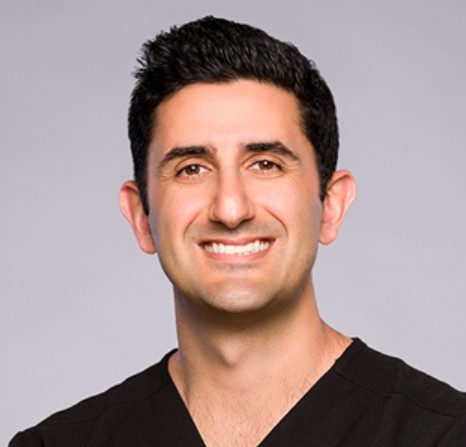
Dr. Paul Daraei is a double board-certified facial plastic surgeon recognized for his exceptional skill, academic excellence, and leadership in the field of facial aesthetics. With advanced fellowship training and thousands of surgical cases completed at Emory University, he combines technical precision with an artist’s eye for natural results. As an affiliate professor and published author in leading medical journals, Dr. Daraei continues to advance the field through teaching, research, and innovation. His commitment to excellence and patient-centered care has established him as one of Atlanta’s most trusted authorities in facial plastic and reconstructive surgery.