

Rhinoplasty is one of the most technically precise and transformative procedures in facial plastic surgery. Whether performed to refine the shape of the nose, correct a structural concern, or restore appearance following injury, the results can have a profound effect on both confidence and facial harmony. At Daraei Facial Plastic Surgery, every rhinoplasty is carefully planned and executed with an eye for natural, balanced outcomes that complement your unique features.
While you will notice changes to your nose almost immediately following surgery, it is important to understand that the final result takes time to fully emerge. Complete healing can take up to one year as residual swelling gradually resolves and the nasal tissues settle into their new form. Patience, combined with diligent post-operative care, is one of the most valuable things you can bring to your recovery.
What to Expect After Your Procedure
As you start your recovery process, there are several things you’ll want to look out for as you heal, including the following:
- Swelling and Bruising: Swelling and bruising around the nose and eyes are a normal and expected part of recovery. Bruising typically peaks within the first 2 to 3 days and begins to fade over the following week or two. Swelling resolves more slowly; most visible swelling improves significantly within the first 2 to 3 weeks, but subtle swelling, particularly at the nasal tip, may persist for many months. Do not judge your final result during the early weeks of recovery.
- Discomfort: The first 3 to 5 days are typically the most uncomfortable. It is normal for swelling and soreness to gradually worsen over the first 3 days before beginning to improve. Do not be alarmed if you feel worse on day 4 than you did on day 2. This is a completely normal part of the healing process. Your prescribed pain medication will help keep you comfortable during this period.
- Nasal Congestion: Significant stuffiness is to be expected during the early weeks of recovery due to internal swelling. This is temporary and will resolve as healing progresses. Do not blow your nose for 4 weeks after surgery. If you need to sneeze, do so with your mouth open to reduce pressure inside the nasal passages.
- Numbness and Sensation Changes: Temporary numbness around the nose and upper teeth is normal following rhinoplasty and will gradually resolve over time. Mild itching near the incision sites as they heal is also expected.
- Surgical Splint: A surgical splint will be placed on your nose at the time of your procedure to protect the nasal structures and support the new shape during early healing. You must not remove this splint, as doing so can negatively impact your surgical result. Dr. Daraei will remove it at your one-week post-operative appointment. You’ll also want to keep your dressings dry at all times. A drip pad will be placed beneath the nose to catch any drainage. Change it as often as needed.
- Bleeding and Drainage: Minor blood-tinged drainage is normal in the first 24 to 48 hours. If bleeding becomes heavy or saturates more than a 4×4 piece of gauze, contact our office immediately.
- Follow-Up Appointments: You will be seen for your first post-operative check the day after your surgery.These visits are an essential part of your care and cannot be rescheduled based on personal preference.
When to Call Our Office Immediately: Please contact us right away if you experience any of the following:
- A fever of 101 degrees Fahrenheit or higher
- Redness that is spreading outward from the incision site
- Unusual or rapidly worsening swelling, particularly on one side of the face
- Active bleeding saturating more than a 4×4 gauze
- Pus or cloudy drainage from the incision site
- Pain that is not relieved by your prescribed medication
What to Avoid After Your Procedure
Protecting your nose during the healing process requires careful attention to your daily habits and activities. Please observe the following restrictions throughout your recovery:
- Do not remove your surgical splint for any reason. Dr. Daraei will remove it at the appropriate time.
- Do not blow your nose for 4 weeks after surgery. Always sneeze with your mouth open.
- Do not bump, press, or rub your nose for at least 6 weeks. Even gentle contact can shift healing structures and affect your result.
- Do not wear eyeglasses or sunglasses that rest on the bridge of the nose for 6 weeks. Contact lenses may be worn as needed during this period.
- Do not wear tight-fitting tops that must be pulled over your head, as these can accidentally catch or press on the nose.
- Avoid strenuous exercise, heavy lifting, and bending down to pick up objects for at least 2 weeks after surgery.
- Do not engage in any sexual activity for at least 2 weeks following surgery.
- Avoid pools, the ocean, and all water activities for 6 weeks after your rhinoplasty.
- Do not apply makeup to the face for the first 5 days while your dressings are in place. Once the dressings have been removed, makeup may be worn.
- Avoid heating pads or any application of heat to the face and nose.
- Do not smoke or spend time around smokers for at least one month after surgery. Nicotine impairs circulation and can significantly compromise healing and your surgical result.
- Do not consume alcohol during the first week after surgery, as it raises blood pressure and increases the risk of bleeding.
- Avoid direct sun exposure to your incisions. Once the incisions have fully healed (typically 3 to 4 weeks), you may begin applying a broad-spectrum sunblock.
- Do not take aspirin, ibuprofen, or vitamin E supplements for 2 weeks after surgery, as these promote bleeding. Tylenol (acetaminophen) is safe for pain relief during this window; ibuprofen may be resumed after 2 weeks.
- Do not operate a motor vehicle while taking narcotic pain medication or within 24 hours of your last dose.
- Avoid hard, chewy, or oversized foods that require excessive jaw movement or wide opening of the mouth.
General Post-Operative Wound Care Instructions
Splint and Dressing Care
Keep your nasal splint and all dressings completely dry. You may wash your hair lightly beginning the day after surgery, but take great care to avoid wetting the dressing. Avoid direct water spray to the face while the splint is in place.
Incision Care
Clean the outside incisions and the inside of the nostrils with hydrogen peroxide and a cotton swab three times daily. After cleaning, apply a small amount of Vaseline or Aquaphor to the inside of the nostrils to keep the tissue moist and comfortable. Apply a thin layer of prescribed ointment to all incision sites twice daily for one week.
Ice Therapy
Apply ice compresses to the eyes (not directly to the nose) during the first 24 hours after surgery (15 minutes on, 15 minutes off). This helps minimize early bruising and swelling around the eyes.
Sleeping Position
Sleep on your back with your head elevated on 2 to 3 pillows for the first week. Do not lie on either side, and avoid twisting or turning your head and neck during sleep. Elevated positioning reduces swelling and protects the nose from accidental pressure.
Blood Clot Prevention
While resting, regularly point your toes upward toward the ceiling and press your heels downward to engage the calf muscles and promote circulation.
Medications
Take all prescribed medications as directed. Use narcotic pain medication (such as Percocet or hydrocodone) only as needed for the first 3 to 5 days, and always eat something before taking it to prevent nausea. If nausea occurs, take your prescribed anti-nausea medication approximately 20 minutes before your next pain medication dose.
Because narcotics, anesthesia, and reduced activity can cause constipation, begin taking an over-the-counter stool softener such as Colace the evening of your surgery and continue while on narcotics. Patients prone to constipation may find Miralax or Milk of Magnesia more effective. If antibiotics were prescribed, begin taking them 2 days before surgery and complete the full course.
Diet
Begin with clear liquids and soft, easy-to-chew foods and progress to your normal diet as tolerated. Avoid hard, crunchy, or chewy foods that require significant jaw effort. Take small bites and eat slowly. Stay well hydrated throughout your recovery.
Rhinoplasty Results
Rhinoplasty produces some of the most meaningful and lasting results in all of facial plastic surgery. Changes to the shape, size, and proportion of the nose are permanent, and with skilled technique, outcomes appear entirely natural, enhancing the face without calling attention to themselves.
It is essential to have realistic expectations about the timeline for your result. While the broad strokes of your outcome will be visible once the splint is removed at one week, the nose will continue to change and refine for up to a full year following surgery. Swelling resolves gradually and unevenly, and the final shape of the nasal tip in particular may not be fully apparent for 9 to 12 months. Minor irregularities visible in the early months often smooth out completely with time.
Dr. Daraei and the entire team at Daraei Facial Plastic Surgery are committed to walking alongside you through every stage of your recovery, from your first post-operative visit through your long-term follow-up care. Please never hesitate to reach out with questions or concerns, no matter how small.
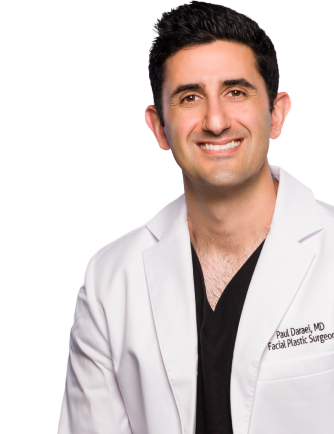
Paul Daraei, MD
Dr. Paul Daraei is deeply committed to excellence and patient-centered care. As a Double Board-Certified Facial Plastic Surgeon, he specializes in all surgical and non-surgical procedures of the head and neck. Dr. Daraei completed a rigorous head and neck surgical program, followed by a fellowship dedicated solely to cosmetic facial plastic surgery. He has worked with prestigious and elite surgeons nationally and internationally to provide comprehensive and state-of-the-art care for his patients in the Atlanta area.
Learn more about DR. daraei









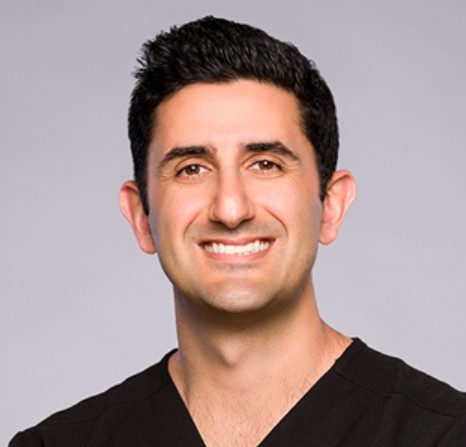
Dr. Paul Daraei is a double board-certified facial plastic surgeon recognized for his exceptional skill, academic excellence, and leadership in the field of facial aesthetics. With advanced fellowship training and thousands of surgical cases completed at Emory University, he combines technical precision with an artist’s eye for natural results. As an affiliate professor and published author in leading medical journals, Dr. Daraei continues to advance the field through teaching, research, and innovation. His commitment to excellence and patient-centered care has established him as one of Atlanta’s most trusted authorities in facial plastic and reconstructive surgery.