


At Daraei Facial Plastic Surgery, each graft was carefully harvested and placed according to your unique hairline design and aesthetic goals. The donor follicles were selected for their viability and positioned to maximize density, coverage, and natural hair flow. The skill and attention to detail invested in your procedure forms the foundation for a successful outcome, but the steps you take during recovery are equally important.
The post-operative period following your FUE hair transplant is a critical phase of your journey. The newly transplanted grafts are delicate and require consistent, attentive care during the first several days to ensure they anchor properly and survive.
Following these instructions closely will protect your investment, minimize complications, and give you the best possible outcome. If you have any questions, do not hesitate to contact our office directly.
What to Expect After Your Procedure
Understanding what is normal in the days and weeks following your FUE procedure will help you remain confident and calm throughout your recovery. Many patients experience a range of sensations and changes that can seem alarming at first but are entirely expected and temporary.
Scalp Sensations
- Numbness, tingling, and altered sensation along the top and back of the scalp are common in the days and weeks after surgery. These changes occur as a result of the micro-trauma to the skin and typically resolve on their own over several weeks, though in some cases it may take a few months.
- Mild pinkness or redness at the graft sites is normal and typically resolves within one week of the procedure.
- Some minor oozing or bleeding from the donor or recipient area may occur during the first 24 hours. Apply gentle pressure with a clean cloth or gauze for approximately 10 minutes if this occurs.
Shedding and Hair Growth Timeline
- Transplanted hair shafts will often begin to shed along with the surface crusts as early as 5 to 8 days after the procedure. This is completely normal and is not a sign that the procedure has failed. Only the visible hair shaft falls out; the follicle remains anchored beneath the surface of the scalp and intact.
- Most of the transplanted hair shafts will shed over the following two weeks. This temporary phase, sometimes called shock loss, is a normal part of the hair restoration cycle.
- New hair growth typically begins emerging from the transplanted follicles approximately four months after the procedure. Growth will continue at the normal rate of one-half to three-quarters of an inch per month.
- Most patients see the majority of their results between 8 and 12 months post-procedure. In some cases, full regrowth may take up to 14 months.
Acne-Like Breakouts
- As new hairs begin to emerge from the scalp, some patients notice small acne-like pimples forming in the graft areas. This is a normal part of the growth process.
- Apply warm compresses and a thin layer of antibiotic ointment to the affected area several times daily for three days. If the pimples do not resolve, contact our office so that we can prescribe an oral antibiotic if appropriate.
Swelling
- Some degree of swelling around the forehead and eyes is possible in the first few days following your procedure. Sleeping with your head elevated and taking prescribed medications as directed will help manage this effectively.
Concealing the Procedure During Recovery
- During the first week, while surface crusts are present, a bandana or loose-fitting hat can be worn to conceal the procedure area. You may wear a hat beginning the day after surgery.
- Hair trimming is permitted two weeks after the procedure, though we advise against cutting the hair too short while healing is ongoing. Hair coloring is also permitted beginning two weeks after the procedure.
What to Avoid After Your Procedure
The grafts placed during your FUE procedure are delicate and can be easily dislodged or damaged in the early postoperative period. Adhering to the following restrictions during the first several weeks is essential to protecting your results.
Physical Activity
- Avoid all strenuous physical activity during the first two days after your procedure. Elevated heart rate and blood pressure increase the risk of swelling and may disturb newly placed grafts.
- After seven days, moderate exercise and light weight lifting may resume gradually.
- Swimming should be avoided until at least 10 days after surgery to reduce the risk of infection and graft disruption.
Sun Exposure
- Avoid direct sun exposure to the scalp for longer than 30 minutes at a time during the first five days. Wearing a hat is the most practical way to protect the scalp when outdoors.
- Do not allow the scalp to become sunburned during the first six days following surgery, as UV damage to healing tissue can affect graft survival.
Hair and Scalp Care to Avoid
- Do not allow direct water pressure to hit the graft areas during the first five days. Shower water should not fall directly onto the recipient sites during this period.
- Avoid combing or brushing through the graft areas until the crusts have fully resolved and healing is complete.
- Do not use harsh or medicated shampoos on the graft areas until instructed to do so. Use only mild baby shampoo beginning on day three after surgery.
Medications and Supplements to Avoid
- Do not mix Ambien or other prescription sleep medications with over-the-counter sleep aids unless directed by our team.
- If you experience scalp redness, irritation, or itching after beginning minoxidil, discontinue use for one week before reintroducing it on an every-other-day basis. If you develop chest palpitations or lightheadedness, stop using minoxidil and contact our office.
General Post-Operative Care Instructions
The following care instructions cover your prescribed medications, scalp hygiene, and overall recovery management during the postoperative period. Please follow each guideline carefully and contact our office if you have any questions.
Prescribed Medications
Your physician may have prescribed one or more of the following medications as part of your postoperative care. Take all medications exactly as prescribed.
- Keflex (antibiotic): Take one pill twice daily for five days to prevent infection.
- Prednisone (steroid): Take in the morning as prescribed to help reduce swelling during the early recovery phase.
- Percocet (oxycodone): Take one pill every four to six hours as needed for discomfort in the donor or recipient areas. Do not take more than directed.
- Tramadol: A milder pain medication available as an alternative for managing mild to moderate discomfort on an as-needed basis.
- Ambien (sleep aid): Take one pill approximately 20 to 30 minutes before your desired sleep time. Do not combine with other sleep aids.
Saline Spray
- Apply the saline spray provided to you directly onto the graft areas every 30 to 60 minutes while awake during the first five days after surgery. Keeping the grafts properly hydrated during this period is critical to their survival and integration.
Sleeping Position
- For the first night following your procedure, sleep with your head elevated on several pillows or rest in a recliner chair. Elevation helps prevent postoperative swelling from accumulating around the eyes and forehead.
- Place a clean towel or pillowcase protector under your head in case of minor oozing or spotting during the night.
Washing and Cleaning the Scalp
Your scalp will be gently cleaned before you leave our office on the day of the procedure. Follow the washing routine below beginning on the second postoperative day:
- Wet the scalp using cool to lukewarm water poured gently over the top, sides, and back of the head using a cup or bowl. You may also allow water to run over the back of your neck and then flow upward. Water must not fall directly onto the graft areas with force.
- Beginning on day three, apply a small amount of mild baby shampoo lathered between your hands. Gently pat it onto the graft areas using only light, dabbing pressure. You may rub it more freely through the sides and back of the scalp away from the grafts.
- Rinse gently and pat the scalp dry with a soft towel. Do not rub.
- Continue this careful daily washing routine through day five. On day six, you may begin showering normally and allow water to contact the scalp as usual.
Managing Surface Crusts
- Any surface crusts that remain after day 8 or 9 should be gently rubbed away. If rubbing causes pain or bleeding, stop immediately and wait an additional two days before attempting again.
- It is important that all crusts are removed by the end of two weeks. Retained crusts can interfere with new hair growth and increase the risk of infection.
Hair Transplant Results
A successful FUE hair transplant is both an art and a science. The results of your procedure will unfold gradually over the course of several months, and patience is an essential part of the process. Understanding the realistic timeline and knowing what steps you can take to support your results will help you stay positive throughout your recovery.
Growth Timeline
- Months 1 to 3: The transplanted hair shafts will shed, and the scalp will appear to return to its pre-procedure state. Beneath the surface, the grafted follicles are anchoring and entering a resting phase. This is completely normal.
- Month 4: New hair shafts begin emerging from the transplanted follicles. Initial growth may appear thin or fine, which is expected at this stage.
- Months 4 to 12: Hair continues to grow at the normal rate of one-half to three-quarters of an inch per month. Density, texture, and coverage will continue improving throughout this period.
- Months 8 to 14: The majority of transplanted hairs will have reached their full growth potential. Some patients experience complete regrowth by 12 months, while others may not reach full density until 14 months after surgery.
Supporting Growth with Minoxidil
- To help accelerate the emergence of new hair growth, you may begin applying 5% minoxidil once or twice daily starting three to four weeks after your procedure. Rogaine Foam is a commonly recommended formulation due to its ease of application.
- Female patients should use the 2% minoxidil formulation as directed.
- If you experience scalp irritation or redness after beginning minoxidil, stop use for one week and then resume at every-other-day frequency. If you experience more significant symptoms such as chest palpitations or lightheadedness, discontinue use and contact our office.
Managing Expectations and Long-Term Care
Hair restoration through FUE produces permanent results because the transplanted follicles are taken from areas genetically resistant to hair loss. However, it is important to understand that the natural hair loss process may continue in untreated areas of the scalp over time. Our team may discuss ongoing therapies or future procedures to address progressive hair loss and maintain the integrity of your overall result.
Please remember that every patient heals and responds to surgery differently. The timeline and appearance of your results may vary from those of other patients. Our team is here to support you throughout your recovery and beyond. Do not hesitate to contact Daraei Facial Plastic Surgery with any questions or concerns during your postoperative journey.
If you experience unexpected pain, excessive bleeding, signs of infection, or any other symptoms of concern, contact Daraei Facial Plastic Surgery immediately. We are committed to your safety and the success of your hair restoration journey.
Paul Daraei, MD
Dr. Paul Daraei is deeply committed to excellence and patient-centered care. As a Double Board-Certified Facial Plastic Surgeon, he specializes in all surgical and non-surgical procedures of the head and neck. Dr. Daraei completed a rigorous head and neck surgical program, followed by a fellowship dedicated solely to cosmetic facial plastic surgery. He has worked with prestigious and elite surgeons nationally and internationally to provide comprehensive and state-of-the-art care for his patients in the Atlanta area.
Learn more about DR. daraei
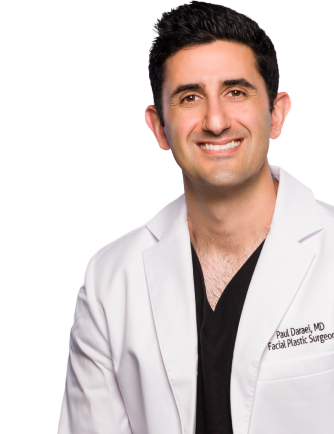










Dr. Paul Daraei is a double board-certified facial plastic surgeon recognized for his exceptional skill, academic excellence, and leadership in the field of facial aesthetics. With advanced fellowship training and thousands of surgical cases completed at Emory University, he combines technical precision with an artist’s eye for natural results. As an affiliate professor and published author in leading medical journals, Dr. Daraei continues to advance the field through teaching, research, and innovation. His commitment to excellence and patient-centered care has established him as one of Atlanta’s most trusted authorities in facial plastic and reconstructive surgery.