


It is important to understand from the outset that scar revision is a process, not a single event. The final outcome depends not only on the skill of the procedure itself, but on how well the new wound is cared for during healing. Following your post-operative instructions closely and protecting the treated area over the months ahead are essential steps in achieving the best possible result.
What to Expect After Your Procedure
There are a few different side effects that you can expect in the days and weeks after your scar revision procedure, including the following:
- Swelling and Redness: Some degree of swelling, redness, and mild inflammation around the treated area is a completely normal response to surgery and should be expected in the days following your procedure. Redness along the incision line may persist for several weeks to months as the new scar matures. This is part of the normal healing process and is not a cause for concern.
- Discomfort: Mild soreness or tenderness at the treatment site is typical during the first several days. For most patients, discomfort is manageable with over-the-counter acetaminophen (Tylenol). If a prescription pain medication was provided, take it only as directed and always with food to minimize the risk of nausea. Do not take aspirin, ibuprofen, or vitamin E supplements for at least 2 weeks after your procedure, as these can thin the blood and increase the likelihood of bleeding.
- Bruising: Depending on the location and extent of your scar revision, some bruising may develop around the treatment area. This is normal and will fade on its own within 1 to 2 weeks.
- Itching: As the incision heals, itching is a common and expected sensation. This signals that the skin is actively repairing itself. Resist the urge to scratch or pick at the area, as doing so can damage fragile healing tissue and worsen the scar’s appearance.
- Sutures: If sutures were placed, they will typically be removed at a follow-up appointment within 5 to 7 days. Dissolving sutures do not require removal. Keeping suture lines clean and protected during this period is critical to minimizing scarring.
- Healing Timeline: The incision site will go through several visible stages of healing over the weeks and months ahead. The scar may initially appear raised, firm, or pink before gradually softening and fading. Most patients see significant improvement within 3 to 6 months, with continued refinement for up to a full year or more after the procedure.
When to Call Our Office Immediately: Please contact us right away if you notice any of the following:
- A fever of 101 degrees Fahrenheit or higher
- Redness that is actively spreading outward from the incision site
- Pus or cloudy drainage from the wound
- Increasing swelling or pain rather than gradual improvement
- Active bleeding that saturates more than a 4×4 piece of gauze
- Pain that is not adequately controlled by your prescribed medication
What to Avoid After Your Procedure
Protecting the healing scar from physical stress, environmental exposure, and irritants is one of the most important things you can do to support a favorable outcome. Please observe the following restrictions:
- Do not pick, scratch, or rub the healing incision at any time. Disrupting the wound surface delays healing and can reintroduce scarring.
- Avoid strenuous exercise, heavy lifting, and bending down to pick up heavy objects for at least 2 weeks after surgery. Physical exertion raises blood pressure and increases the risk of bleeding and wound disruption.
- Do not submerge the treated area in water. This means no swimming, hot tubs, or soaking baths until the incision is fully healed and free of scabbing, which typically takes 4 to 6 weeks.
- Avoid direct sun exposure to the scar for a minimum of 6 months. Sun exposure is one of the most common causes of poor scar outcomes. UV rays can permanently darken a healing scar, making it far more visible. Even on cloudy days, UV exposure occurs. Always apply a broad-spectrum SPF 30 or higher sunblock to the area and wear a brimmed hat when outdoors. This habit should be maintained consistently throughout the first year of healing.
- Do not apply makeup or skincare products to the incision site until cleared by Dr. Daraei, typically after the sutures have been removed and the surface has fully closed.
- Do not smoke or spend time in environments with secondhand smoke for at least one month following surgery. Nicotine constricts the small blood vessels that supply oxygen and nutrients to healing tissue, significantly increasing the risk of poor wound healing, infection, and unsatisfactory scarring.
- Avoid alcohol during the initial recovery period, particularly while taking any prescribed medications.
- Do not apply heat to the treatment area, including heating pads or hot compresses.
- Avoid aspirin, ibuprofen, and vitamin E for 2 weeks after your procedure.
General Post-Operative Wound Care Instructions
Wound Cleaning
Gently cleanse the incision site twice daily using a mild saline solution or as specifically directed by Dr. Daraei. Use a clean cotton swab or soft gauze and avoid any scrubbing or rubbing motions. Pat the area dry with a clean cloth after cleansing.
Antibiotic Ointment
After cleansing, apply a thin layer of topical antibiotic ointment — such as Bacitracin or a prescribed alternative — to the incision to prevent infection, maintain a moist healing environment, and reduce the formation of scabs. Keeping the wound slightly moist during early healing has been shown to support better scar outcomes than allowing it to dry out.
Dressings
Keep the wound covered with a clean dressing as directed. Change dressings as instructed or whenever they become wet or soiled.
Scar Therapy
Once the incision has fully closed and sutures have been removed, Dr. Daraei may recommend a scar therapy regimen to further optimize your result. This may include silicone gel sheets or topical silicone gel, which are among the most evidence-supported methods for improving scar texture and reducing redness over time. Follow all recommended protocols consistently, as these therapies work gradually and require regular use to be effective.
Massage
In some cases, gentle scar massage may be recommended once the incision has fully healed. Scar massage helps break down underlying fibrous tissue, improving softness and pliability over time. Dr. Daraei will advise you on when and how to begin this, as starting too early can disrupt healing.
Medications
Take all prescribed medications exactly as directed. If antibiotics were provided, complete the full course even if the area looks and feels well before it is finished. Begin taking an over-the-counter stool softener the night of your procedure if narcotic pain medication was prescribed, and continue as needed.
Sun Protection
Rigorous and consistent sun protection is not optional; it is one of the single most important factors in determining your long-term scar outcome. Apply SPF 30 or higher sunblock daily to the treated area for at least 6 months, regardless of weather or planned time outdoors.
Scar Revision Results
Scar revision, when performed by a skilled facial plastic surgeon and supported by careful post-operative care, can produce a dramatic and lasting improvement in the appearance of a scar. Scars that were once raised, discolored, widened, or otherwise prominent can be significantly refined to blend more naturally with the surrounding skin.
It is important to approach your results with patience and realistic expectations. Because scar revision essentially creates a new, more refined wound in place of the old one, the healing process must run its full course before the final result can be evaluated. The new incision will go through stages of redness, firmness, and subtle elevation before gradually softening and fading. Most patients see compelling improvement within 3 to 6 months, with the final result fully apparent at the one-year mark.
Our team at Daraei Facial Plastic Surgery is here to guide and support you throughout the entire healing journey, and we encourage you to attend all scheduled follow-up visits so that Dr. Daraei can monitor your progress and make any recommendations to further enhance your results.
Paul Daraei, MD
Dr. Paul Daraei is deeply committed to excellence and patient-centered care. As a Double Board-Certified Facial Plastic Surgeon, he specializes in all surgical and non-surgical procedures of the head and neck. Dr. Daraei completed a rigorous head and neck surgical program, followed by a fellowship dedicated solely to cosmetic facial plastic surgery. He has worked with prestigious and elite surgeons nationally and internationally to provide comprehensive and state-of-the-art care for his patients in the Atlanta area.
Learn more about DR. daraei
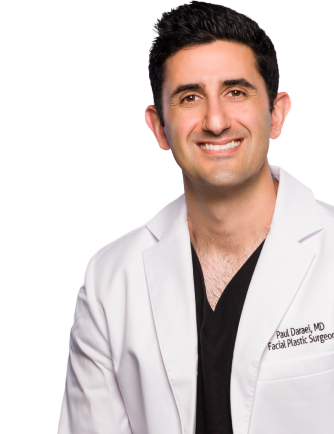










Dr. Paul Daraei is a double board-certified facial plastic surgeon recognized for his exceptional skill, academic excellence, and leadership in the field of facial aesthetics. With advanced fellowship training and thousands of surgical cases completed at Emory University, he combines technical precision with an artist’s eye for natural results. As an affiliate professor and published author in leading medical journals, Dr. Daraei continues to advance the field through teaching, research, and innovation. His commitment to excellence and patient-centered care has established him as one of Atlanta’s most trusted authorities in facial plastic and reconstructive surgery.