


This rhinoplasty guide exists because board-certified surgeons and the credentials behind them are among the most consequential variables in your outcome. Rhinoplasty is widely recognized as one of the most technically demanding procedures in all of facial plastic surgery. The nose occupies the center of the face; its proportions affect every surrounding feature, and its internal structures govern breathing function. For patients in Atlanta, GA, who are carefully researching their options before committing to a consultation, this page provides a clear, honest framework for evaluating surgeons and understanding what board certification means in practice.
What Board Certification Actually Means in Rhinoplasty Surgery
Board certification is not a single standard. There are dozens of medical certification boards, and they are not all equivalent. When evaluating a rhinoplasty surgeon, two certifications are most relevant: the American Board of Facial Plastic and Reconstructive Surgery and the American Board of Otolaryngology, Head and Neck Surgery. Very few surgeons hold both.
Why Dual Certification Matters for Nasal Surgery
Rhinoplasty involves both aesthetic and functional anatomy. The external structure of the nose, including the dorsum, tip, columella, and alar base, determines appearance. The internal architecture, including the septum, turbinates, and nasal valves, governs airflow. A surgeon trained exclusively in cosmetic outcomes may lack the depth of functional training needed to address breathing concerns alongside aesthetic goals. Conversely, a surgeon focused only on function may not bring the same precision to proportions and balance.
Dr. Paul Daraei holds dual board certification from both qualifying bodies, making him among a relatively small group of surgeons nationally who carry credentials in both domains. His residency included over 3,000 plastic and reconstructive surgical cases, a volume that exceeds what many surgeons accumulate across an entire career, followed by a dedicated fellowship in facial plastic surgery. This foundation gives him a technically grounded understanding of nasal anatomy that informs every rhinoplasty he performs.
When you review a surgeon’s credentials, look specifically for these certifications rather than accepting board certification as a general category.
Understanding the Rhinoplasty Process and What a Board-Certified Surgeon Will Address
A thorough rhinoplasty consultation covers considerably more than aesthetics. Understanding the full scope of what your surgeon should assess helps you evaluate the quality of care you receive during that initial appointment.
Structural and Functional Assessment
Before any conversation about cosmetic goals, a qualified surgeon will evaluate your nasal airway. Conditions such as a deviated septum or internal valve collapse can affect breathing and may be addressed concurrently with cosmetic changes. Separating these concerns without a thorough workup can result in outcomes that appear improved but function poorly or require revision surgery to correct what was initially overlooked.
Why Choose Dr. Paul Daraei in Atlanta, GA
Dr. Paul Daraei brings a level of focused expertise to rhinoplasty that is genuinely uncommon. His practice is dedicated exclusively to the face and neck. He is a member of the American Academy of Facial Plastic and Reconstructive Surgery and the American College of Surgeons, Georgia Chapter, affiliations that reflect both national standards and local professional accountability. To learn more about his background and training, visit the full profile for Dr. Paul Daraei.
Frequently Asked Questions About Rhinoplasty and Board-Certified Surgeons
What should I bring to a rhinoplasty consultation to make the most of my time?
Bring photos of nasal concerns from multiple angles, any prior surgical records if you have had previous nasal procedures, and a clear sense of what bothers you functionally as well as aesthetically. Specific concerns, including difficulty breathing through one or both sides, are clinically relevant. Prepared patients tend to leave consultations with clearer answers and more accurate expectations.
How long does rhinoplasty recovery typically take in Atlanta’s climate?
Initial recovery typically involves swelling and bruising for one to two weeks, with most patients returning to social and professional activities within that window. Heat and humidity can affect comfort during outdoor recovery, so scheduling your procedure in the cooler months is worth considering for Atlanta patients. Full resolution of swelling, particularly at the nasal tip, can take up to twelve months.
Does Dr. Daraei perform rhinoplasty for both cosmetic and functional concerns?
Dr. Daraei’s dual board certification in facial plastic surgery and otolaryngology positions him to address cosmetic goals and functional airway concerns in a single procedure when clinically appropriate. Many patients present with both. A thorough pre-operative evaluation will determine whether combining these goals is the right approach for your anatomy and health profile. Consult with Dr. Daraei directly for a personalized assessment.
Contact Us
Dr. Paul Daraei welcomes patients from Atlanta, Sandy Springs, and the surrounding region for consultations that are thorough, direct, and pressure-free. Complete the online contact form for details to schedule your appointment.
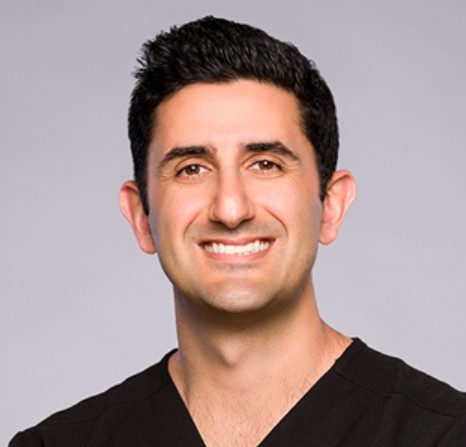
Dr. Paul Daraei is a double board-certified facial plastic surgeon recognized for his exceptional skill, academic excellence, and leadership in the field of facial aesthetics. With advanced fellowship training and thousands of surgical cases completed at Emory University, he combines technical precision with an artist’s eye for natural results. As an affiliate professor and published author in leading medical journals, Dr. Daraei continues to advance the field through teaching, research, and innovation. His commitment to excellence and patient-centered care has established him as one of Atlanta’s most trusted authorities in facial plastic and reconstructive surgery.