
Considering a facelift in your 40s is more common than many people realize, and for good reason. Facial aging does not follow a fixed calendar, and a growing number of patients in their 40s are experiencing changes in the jawline, midface, and neck that injectables and skin treatments can no longer adequately address. This page is designed to help you evaluate your candidacy with accurate, data-grounded information rather than marketing language. If you are in the Atlanta, GA area and would like to discuss your specific concerns with a specialist, you are welcome to call for details and schedule a consultation with Dr. Paul Daraei.
Ready to take the next step? Contact us for details to schedule your consultation with Dr. Daraei in Atlanta.
What Facial Changes in Your 40s Actually Signal Facelift Candidacy
The decision to pursue a facelift in your 40s should be grounded in observable anatomy, not age alone. Several specific changes suggest that surgical repositioning of deeper facial structures may provide more meaningful, longer-lasting improvement than non-surgical options.
Descent of the SMAS Layer
The SMAS (superficial musculoaponeurotic system) is the fibromuscular layer beneath the skin that gives the face its structural support. As this layer descends with age, it creates visible changes: deepening nasolabial folds, jowl formation along the jawline, and loss of the sharp mandibular border that characterizes a youthful profile. When these changes are driven by structural descent rather than volume loss alone, adding filler addresses the surface without correcting the underlying cause.
Platysmal Banding and Neck Laxity
Visible banding of the platysma muscle, loose skin under the chin, and early neck laxity are among the most reliable indicators that surgical intervention merits discussion. Many patients in their 40s who are strong facelift candidates also benefit from a combined facelift procedure in Atlanta that addresses the lower face and neck simultaneously.
Skin Elasticity That Still Supports Surgical Outcomes
One clinical advantage of pursuing a facelift in your 40s, rather than waiting, is that skin elasticity is generally better preserved. Tissue that retains reasonable elasticity responds well to repositioning and tends to heal with less visible tension. Patients with good baseline skin quality who undergo surgery earlier in the aging process often achieve results that appear more natural and are easier to maintain long-term. Individual results may vary based on skin type, sun exposure history, and overall health.
Facelift in Your 40s vs. Non-Surgical Alternatives: Understanding the Data
Patients who like to review evidence before making decisions deserve a straightforward comparison. Non-surgical treatments including injectables, energy-based devices, and aesthetic skin treatments can provide meaningful improvement for patients whose concerns are primarily related to volume loss or surface texture. However, published clinical literature consistently shows that these approaches do not reposition descended facial structures.
What Non-Surgical Options May Address
Neuromodulators and dermal fillers may help soften early lines, restore midface volume, and improve skin quality. Treatments such as Fractionated CO2 laser may improve skin texture, tone, and collagen density. These remain valuable tools, and in practice, Dr. Daraei frequently combines them with surgical procedures to optimize outcomes. They are not, however, substitutes for structural correction when the underlying tissue has descended.
When Surgery Becomes the More Efficient Path
Research on facial aging suggests that the rate of structural change accelerates in the late 30s and 40s. For patients with jowling, significant nasolabial deepening, and neck laxity, non-surgical maintenance requires repeated treatments at increasing cost over time, often with diminishing returns. A well-executed deep plane facelift in Atlanta addresses the structural cause directly and can deliver results that remain stable for a decade or longer in appropriate candidates. Individual results may vary.
The right choice depends entirely on what is causing your visible changes. That determination requires an in-person evaluation, not a checklist.
What to Expect as a Facelift Candidate in Your 40s
Patients considering a facelift in their 40s often have specific questions about recovery, naturalness of results, and what the surgical process actually involves. Here is what the clinical reality looks like for most candidates in this age group.
Recovery and Downtime
Most patients in their 40s experience a recovery period of approximately two weeks before returning to professional and social activities, with residual swelling continuing to resolve over several months. Reviewing the detailed post-operative instructions available from the practice can give you a realistic picture of the recovery timeline. Because patients in their 40s often have better tissue healing capacity, many tolerate the recovery process well, though individual experience varies.
Naturalness of Results
The aesthetic goal of a facelift at any age, and particularly in the 40s, is not to erase evidence of aging entirely. The aim is to restore facial harmony, sharpen the jawline, and reduce the disconnect between how a patient feels and how they appear. Dr. Daraei’s technical approach centers on repositioning rather than pulling, which is what separates a natural-looking outcome from one that appears operated. Viewing the practice’s deep plane facelift before-and-after photos may help calibrate expectations. Individual results may vary.
Combining Procedures
Many patients in their 40s pursue the lower face and neck together. A neck lift performed concurrently may help address platysmal banding and submental laxity in a single surgical session, reducing overall recovery time compared to staged procedures.
Why Choose Dr. Paul Daraei for a Facelift in Atlanta, GA?
For patients in Atlanta and the surrounding areas, including Sandy Springs and the broader metro region, selecting a surgeon who specializes exclusively in the face and neck is a meaningful distinction. Dr. Daraei is double board-certified by both the American Board of Facial Plastic and Reconstructive Surgery and the American Board of Otolaryngology, Head and Neck Surgery. Very few surgeons hold both certifications, and the combination reflects a depth of anatomical training that extends beyond cosmetic outcomes to a functional understanding of facial structures.
His Emory University residency encompassed more than 3,000 plastic and reconstructive surgical cases, a volume most surgeons do not reach over an entire career. He completed an additional dedicated fellowship in facial plastic surgery, and he currently serves as an affiliate professor at Emory’s Department of Otolaryngology, training the next generation of facial surgeons. He is also a published researcher and presents at national and international conferences.
To learn more about Dr. Daraei’s training and approach, visit the full surgeon profile. Consultations are unhurried, judgment-free, and focused on helping you make the decision that is right for you.
Frequently Asked Questions About Facelift in Your 40s
Is 40 too young for a facelift?
Age alone is not the deciding factor. Candidacy is based on the type and degree of anatomical changes present, not a minimum age threshold. Some patients in their early 40s have structural changes that respond better to surgery than to non-surgical options. Others in their 40s are well-served by less invasive approaches. A consultation with a board-certified facial plastic surgeon is the most reliable way to determine candidacy. Individual results may vary.
What is the difference between a mini facelift and a full facelift for someone in their 40s?
A mini facelift addresses early jowling and lower face laxity through a more limited incision pattern and is often appropriate for patients with milder changes. A full facelift, particularly a deep plane approach, repositions deeper structural layers and addresses more advanced descent of the midface, jawline, and neck. Which approach is appropriate depends on your specific anatomy, not your age.
How long do facelift results typically last for patients in their 40s?
Results from a well-executed facelift may remain visible for ten years or more, as the procedure repositions underlying tissue rather than simply treating the skin surface. Patients in their 40s who have good skin elasticity may find their results are well-maintained over time. Aging continues after surgery, so results are not permanent. Individual results vary based on genetics, skin quality, lifestyle, and sun exposure history.
Will a facelift in my 40s look natural or obvious?
A properly performed facelift should not look “done.” The goal is facial harmony and restoration of structure, not an altered appearance. Dr. Daraei’s approach emphasizes repositioning tissue rather than pulling skin, which is the technical foundation of a natural outcome. Reviewing before and after photos from the practice can provide a realistic reference point. Individual results may vary based on anatomy and healing.
Are there non-surgical options I should try before considering surgery?
For patients with early-stage changes, non-surgical options including injectables, energy-based devices, and skin resurfacing treatments may provide meaningful improvement and are worth discussing. However, when structural descent of the SMAS layer or platysmal banding is the primary concern, non-surgical treatments address the surface rather than the cause. A thorough consultation will help clarify which approach aligns with your goals and anatomy.
Contact Us
If you are evaluating a facelift in your 40s and want an honest, data-informed conversation about your candidacy, Dr. Paul Daraei serves patients throughout Atlanta, GA, and the surrounding region. Consultations are focused on your anatomy, your goals, and the options that genuinely make sense for you. Call for details to schedule your consultation today.
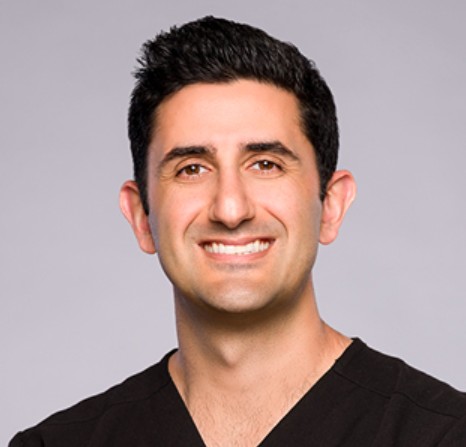
Dr. Paul Daraei is a double board-certified facial plastic surgeon recognized for his exceptional skill, academic excellence, and leadership in the field of facial aesthetics. With advanced fellowship training and thousands of surgical cases completed at Emory University, he combines technical precision with an artist’s eye for natural results. As an affiliate professor and published author in leading medical journals, Dr. Daraei continues to advance the field through teaching, research, and innovation. His commitment to excellence and patient-centered care has established him as one of Atlanta’s most trusted authorities in facial plastic and reconstructive surgery.