What is a Facelift?
A facelift (also known as a rhytidectomy) is a cosmetic surgical procedure designed to help patients achieve a more youthful appearance. By reducing and tightening sagging skin, smoothing skin folds, removing excess skin, and repositioning fat pads and facial tissues, Dr. Daraei helps his patients look years younger. But every facelift is unique to each patient. It’s not one-size-fits-all. During your consultation with Dr. Daraei, he will customize your surgery to meet your goals.
A facelift can also be combined with other procedures for a comprehensive facial rejuvenation, including a neck lift, eyelid surgery, brow lift, and more. At our office, we also offer deep plane facelift procedures and mini facelifts.
Candidates for a Facelift
If you’re struggling with sagging cheeks, jowls, excess skin along your lower jawline, excess fat around the neck, and deep skin folds, you are likely a perfect candidate for a facelift. On top of that, we recommend you be in good overall health, be a nonsmoker, not have any medical conditions that could negatively affect the healing process, and have realistic expectations of treatment. You should also have relatively good skin elasticity and not be pregnant or breastfeeding.
Facelift Surgery Procedure
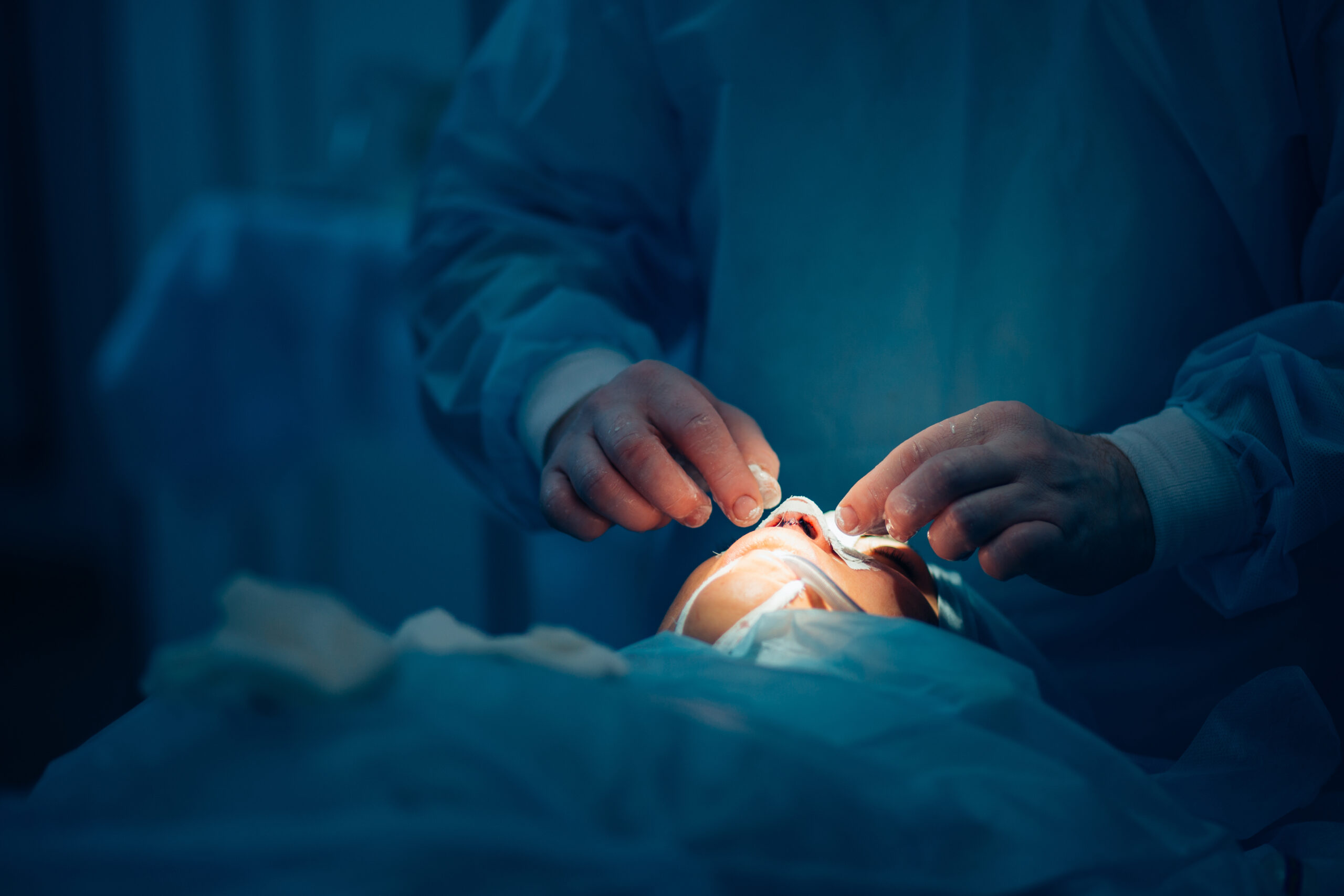
To start the traditional facelift procedure, our team will begin by administering general anesthesia. This will ensure you’re completely comfortable throughout the surgical process. From there, we will cleanse the treatment area, and Dr. Daraei will start making the appropriate incisions. More often than not, the incisions are made in the hairline, around the ears, and in the lower scalp. This will ensure any incisions and scarring are hidden. Another incision may be done under the chin to improve the neck.
Once the incisions are made, the skin will be pulled back. Any fat deposits will be redistributed or rearranged, skin and muscles will be tightened, folds will be smoothed, and excess skin will be removed. What exactly occurs during your facelift will depend on the results you’re looking for and your facial concerns. The surgery typically takes 3-4 hours in total.
Facelift Recovery
After your facelift, you will be able to go home immediately. That said, you will have some swelling, bruising, and discomfort. These side effects are temporary, but they can stick around for a few weeks as you heal. During this time, you’ll want to rest as much as possible, apply sunscreen regularly, avoid excess sun exposure, and abstain from any strenuous activities. Most patients need to take about two weeks off work, but should wait 4 weeks before returning to strenuous exercise.
As for your results, you may notice some minor improvements right after your facelift, but more significant results will be hidden by the bruising and swelling. In the weeks following your surgery, as you recover, the changes to your face will be more obvious. Full results can take up to 3-6 months.
Schedule a Facial Plastic Surgery Consultation
Tired of looking tired and older than you are? A facelift may be the perfect solution. And with the expertise of double board-certified facial plastic surgeon Dr. Paul Daraei, you can feel comfortable putting your safety and satisfaction in his hands. He will take all your concerns and goals into consideration when building your customized treatment plan. To get started, schedule a consultation today. Call our Atlanta office or message us via our online contact form.
Frequently Asked Questions
What is a facelift and how does it work?
A facelift is a cosmetic surgery that elevates the skin of the face to access the deeper soft tissues of the face that droop with time. These deep soft tissues, referred to as the SMAS, are elevated and repositioned in a more youthful fashion. In a similar fashion, a necklift addresses the deeper layers of the neck that sit underneath the skin. This includes tightening the platysma muscle, removing excess skin, and contouring glands to achieve a better neckline.
Am I a good candidate for a facelift?
Most patients who are healthy and who display signs of facial aging are good candidates for a facelift. It is important to review your anatomy and goals with a surgeon, and have a full medical history and physical to ensure good health prior to undergoing an elective, cosmetic surgery such as a facelift.
What is the difference between a full facelift, mini facelift, and neck lift?
The terms full facelift, mini facelift, and other trademarked techniques are confusing and can be misleading. A facelift is a surgery that addresses the deep tissues of the face from the jawline to the cheeks to reposition them in a more youthful position. A necklift addresses the deeper tissues and skin of the neck below the jawline. A mini facelift is a marketing term used by some surgeons and can lead to mini or inadequate results. The most important thing is to find a surgeon that is transparent about their technique and results prior to moving forward with surgery.
How do I choose the best facelift surgeon near me?
Finding the best facelift surgeon starts by searching for board certified facial plastic surgeons in your area or within reach by travel. Next, review the surgeon’s content, which includes website, before and afters, reviews, and word of mouth (if possible). Next, select 2-3 surgeons whose aesthetic matches yours and call their office to discuss details with their staff and schedule an in-person consultation.
What is the best age to get a facelift?
There is no best age to get a facelift. If you have signs of facial aging, which include loss of facial volume, deeper folds between the nose and mouth, or jowling, then you are a candidate for a facelift. There are some patients who, due to a combination of factors, have signs of facial aging as early as their 30s. Others don’t show signs until their 50s and 60s. I believe that once signs of facial aging are visible, then it is reasonable to get a facelift, as long as you discuss your goals with a qualified surgeon and ensure you are a healthy candidate for elective surgery.
How long does a facelift procedure take?
Facelifts alone take between 1.5-2.5 hours. However, most facelifts are combined with necklift and other facial rejuvenation surgeries such as browlift, eyelid lifts, lasers, and others. This can increase the length of the procedure. On average, a patient who undergoes a combined deep plane facelift and deep plane necklift is asleep for about 3.5 hours.
Is a facelift safe?
Yes, facelifts are very safe procedures. They are low-risk surgeries that are reproducible and create wonderful results. As with any surgeries, there are risks, benefits, and alternatives; however, in experienced hands, risks are unlikely.
What type of anesthesia is used for a facelift?
Most surgeons use general anesthesia for facelift procedures. This includes intubation to secure the airway and TIVA, which is a form of general anesthesia that does not require intubation. Both are safe and effective ways of achieving comfort during a facelift. The decision is often up to the surgeon and their staff. I recommend the patient discuss options thoroughly with the surgeon prior to proceeding with surgery.
How is a facelift different from non-surgical treatments like fillers or Botox?
Facelifts are surgeries that require incisions to gain access to deep tissues of the face and surgical reposition them to more youthful positions to rejuvenate the face. This is often combined with a necklift to rejuvenate the neck and create an improve neck and jawline together. Fillers use gel-like substances to increase volume where they are applied. They cannot lift or reposition tissues, but they can improve certain wrinkles and camouflage some signs of aging temporarily. Botox, or other neuromodulators, temporarily paralyze muscles and can prevent wrinkles that form when you move certain parts of your face (like the brow, crows feet, and forehead). Filler and neuromodulators are adjuncts to facelifting that can add some improvements, but not replace a facelift.
How much does a facelift cost?
Facelift costs range greatly based on surgeon, location, and types of procedures added to the facelift. Nationally, facelifts can start at $5,000 and be as high as $40,000. Combined with necklifts and other rejuvenation procedures of the face, costs can increase. Operating room (OR) and anesthesia fees also apply depending on the surgeon and the office.
Is facelift surgery covered by insurance?
Generally speaking, no - facelifts and necklifts are considered elective and cosmetic and are not covered by insurance. There are some patients in very specific situations who can have facelifts covered by insurance, but this is rare. My office does not take insurance for elective, cosmetic surgeries.
Are there financing or payment plan options for facelift surgery?
Financing or payment options vary by practice. Our practice accepts CareCredit, Alphaeon, and PatientFi.
What is the typical recovery time after a facelift?
A typical recovery after facelift surgery involves tightness and very mild pain in the face and neck area for 1-3 days. There is often a dressing that stays wrapped around the head for one day and is removed the day after surgery. There is swelling and bruising for 3-5 days, usually located 3 finger breadths in front of and behind the ear. Sutures are removed around day 7 and most patients feel comfortable returning to their public routine in 2 weeks.
How painful is facelift recovery?
Facelift surgery is not painful. There is tightness and soreness, but there should not be a significant amount of pain. We prepare our patients with pain medication and anesthetize the face accordingly to minimize pain in the post-operative period.
When can I return to work, social events, or exercise after a facelift?
Most patients return to work 2 weeks after a facelift. Depending on the social event, most people are comfortable returning to in-person social events 2-4 weeks after surgery. Exercise can begin with mild activity 2 weeks after surgery with gradual increase to full exercise in 4 weeks.
How long will swelling and bruising last after a facelift?
Swelling and bruising is normal after a facelift. In face, no swelling/bruising would be abnormal. Most patients have swelling and bruising 3 finger breadths in front of and behind the ear, and 2 finger breadths under the chin for 3-5 days. Bruising usually resolves after the first week, but swelling can linger for a few weeks, especially in the high cheeks and under the chin. Gentle massages can help, along with an optimized diet and sleeping elevated.
How long do facelift results last?
Facelift results are permanent. However, time and gravity continue and aging does not stop. I tell most patients that facelifting is similar to a conveyer belt of time. We will pick you up and move you 10-15 years back and put you down. The conveyer belt will keep moving and you will age gracefully moving forward.
When will I see the final results of my facelift?
Most people see the final results of their facelift at 6 weeks. However, even at 6 weeks some patients have swelling that hasn’t fully resolved and some incisions have not fully healed. At the 6 month point, almost all patients have healed enough to consider this a final result.
Will my facelift look natural or noticeable?
The answer is yes to both. Deep plane facelifting in experienced hands will look natural as the aging, droopy tissue will be repositioned into a more youthful position. My goals are for facelifts results to be noticeable, but not obvious. I want patients to look younger and more refreshed, rather than unusual and distorted. This is achieved by discussing goals and techniques with patients transparently, and making appropriate, yet conservative, changes to the face.
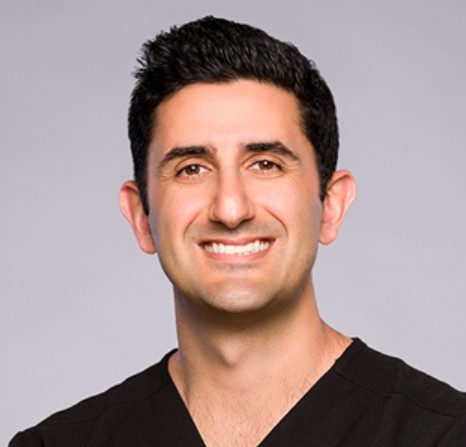
Paul Daraei, MD
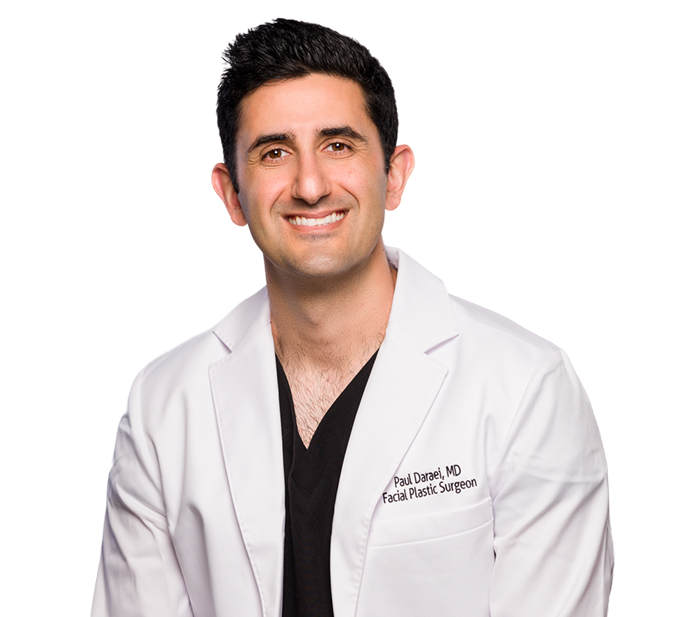
Dr. Paul Daraei is deeply committed to excellence and patient-centered care. As a Double Board-Certified Facial Plastic Surgeon, he specializes in all surgical and non-surgical procedures of the head and neck. Dr. Daraei completed a rigorous head and neck surgical program, followed by a fellowship dedicated solely to cosmetic facial plastic surgery. He has worked with prestigious and elite surgeons nationally and internationally to provide comprehensive and state-of-the-art care for his patients in the Atlanta area.
Learn more about DR. daraei
“Absolutely no Judgment”
This was my first foray into the world of plastic surgery. While I try to keep myself in shape, the condition around my eyes made me look old and tired. Of course, I was nervous when I met with Dr. Daraei and his staff for the consultation. Everyone was very nice and there was absolutely no judgment projected toward me by any of the staff.
In fact, the entire staff and Dr. Daraei seemed genuinely enthusiastic about helping me feel better about my appearance.
“Dr. Daraei is the best doctor”
If you're interested in rhinoplasty, Dr. Daraei is the best doctor to go to! I came to him with a deviated nose and severe breathing issues.
Now, only a month out of surgery, my breathing is amazing and my nose looks beautiful! I cannot say enough amazing things about Dr. Daraei and his work!!
“I never felt rushed”
During the consultation all my questions were answered and Dr.
Daraei suggested the tissue removal from my eyelids. He mentioned the slightly swollen look that I thought was a sinus condition. When he showed me how much of my eyelid was hidden, l was amazed. He then took the time to explain the procedures I might want and answered every question I had. At no time did he make me feel pressured or rushed or that he had somewhere else to go.
“Would do it Again!”
Dr. Paul Daraei performed blepharoplasty on both my eyes. He removed the very pronounced bags from under my eyes and removed tissue from my upper eyelids that made it look like I did not have eyebags, when my eyes were open. Let me say this is the best thing I have done for my appearance and would do it again!
Dr. Paul Daraei is a double board-certified facial plastic surgeon recognized for his exceptional skill, academic excellence, and leadership in the field of facial aesthetics. With advanced fellowship training and thousands of surgical cases completed at Emory University, he combines technical precision with an artist’s eye for natural results. As an affiliate professor and published author in leading medical journals, Dr. Daraei continues to advance the field through teaching, research, and innovation. His commitment to excellence and patient-centered care has established him as one of Atlanta’s most trusted authorities in facial plastic and reconstructive surgery.