


The most commonly used materials for lip augmentation include hyaluronic acid-based fillers, which are naturally occurring substances in the body and are well-tolerated by most patients. These fillers add structure and hydration to the lip tissue, producing results that are soft and pliable. Surgical options, such as fat grafting or fat transfer, offer longer-lasting results and may be recommended depending on your individual case.
Recovery from lip augmentation is generally straightforward, though the process requires patience and careful adherence to post-operative guidelines. Immediately following the procedure, it is normal to experience swelling, tenderness, and bruising around the treated area. These effects are temporary and are a natural part of the healing process.
The first three to five days are typically the most uncomfortable. Swelling tends to peak around days two to three before gradually subsiding, so do not be discouraged if you feel worse before you begin to feel better. Improvement is progressive, and final results become more apparent as the tissue settles over the following weeks.
Your commitment to following these instructions directly impacts the quality and longevity of your results. Please read the following guidelines thoroughly and do not hesitate to contact our office with any questions or concerns.
Contact Our Office Immediately If You Experience
Your safety is our priority. Certain symptoms following lip augmentation may indicate a complication that requires prompt medical attention. Call our office right away if you notice any of the following:
- A fever of 101 degrees Fahrenheit or higher
- Any change in vision, including double or blurred vision
- Redness that is spreading outward from the incision or injection site
- Unusually painful swelling or swelling that is visibly asymmetrical
- Active bleeding that saturates more than a 4×4 gauze pad
- Discharge of pus or any purulent drainage from the treatment site
- Pain that is not adequately controlled by your prescribed pain medication
What to Expect After Your Procedure
Understanding what is normal during recovery will help you manage your healing with confidence. The following are expected experiences in the days and weeks after your procedure:
Swelling and Bruising
Swelling and bruising are normal and expected following lip augmentation. These effects typically intensify over the first two to three days before gradually improving. Keeping your head elevated on two to three pillows for the first week will help minimize swelling. Applying cold compresses to the lip area as much as possible while awake and until you go to sleep is also strongly encouraged.
Discomfort and Sensitivity
Some degree of tenderness and sensitivity around the lips and surrounding area is to be expected during the initial recovery period. The first three to five days are generally the most difficult. Discomfort should gradually diminish after this point. Pain medication can be used to help manage any significant discomfort during this window.
What to Avoid After Your Procedure
Adhering to the restrictions below is essential to a smooth recovery and to protecting your results. Many of these limitations are temporary, and your care team will advise you when it is safe to resume normal activity.
Physical Activity and Movement
- Avoid all strenuous physical activity, exercise, and heavy lifting for several weeks following surgery, depending on the type of lip augmentation done.
- Do not bend down to pick up heavy objects or engage in any activity that causes straining for a few weeks.
- Do not engage in sexual activity for a minimum of one to two weeks after surgery.
- Do not lie on either side. Avoid twisting or turning your head and neck.
- Do not wear any clothing that must be pulled snugly over your head.
Skincare and Facial Contact
- Do not bump, stretch, or rub your face or the lip area for at least two weeks.
- Avoid the use of makeup for the first few days. After this period, makeup may be worn as tolerated.
- Do not apply heating pads to the face or treatment area.
- Avoid direct sunlight exposure to the treatment area, and apply sunblock regularly.
- Do not submerge the lip area under water, including baths, pools, or hot tubs, until the site has healed completely without any remaining scabs.
Substances to Avoid
- Do not smoke. Smoking significantly impairs healing and increases the risk of complications.
- Avoid alcohol consumption for the first week after your procedure. Alcohol can elevate blood pressure and increase the likelihood of post-operative bleeding.
- Do not take aspirin, ibuprofen, or vitamin E supplements for two weeks following lip augmentation, as these can thin the blood and promote bleeding. Tylenol is an acceptable alternative.
General Post-Operative Care Instructions
Medications
Take all prescribed medications as directed. Pain management, nausea control, and antibiotics each play an important role in your recovery.
- Pain Medication (Percocet or Hydrocodone): Use only as needed during the first three to five days. Always eat something before taking a narcotic pain reliever, regardless of the time of day, to reduce the risk of nausea. Narcotics frequently cause constipation. Begin taking an over-the-counter stool softener, such as Colace, on the evening of your surgery and continue using it for as long as you are taking narcotics. If you are prone to constipation, Miralax or Milk of Magnesia may be more effective options. After five days, transition to Tylenol for pain control. Ibuprofen may be used after two weeks.
- Anti-Nausea Medication (Zofran or Promethazine): If nausea occurs after taking your pain medication, take your anti-nausea medication approximately 20 minutes before your next dose of pain medication.
- Antibiotics (Keflex, Clindamycin, or Bactrim): Begin your prescribed antibiotic two days before your surgery date and continue as directed.
Incision and Wound Care
- Apply a thin layer of prescribed ointment to your incision sites twice daily for one week.
- You may wash from the chest down during the first 48 hours. Keep dressings clean and dry during this period.
- Light facial cleansing is permitted two days after surgery. Use a mild, gentle cleanser with cool water and pat the skin dry. Do not scrub or apply pressure to the treatment area.
- Do not submerge the treatment area in water until they are fully healed, with no remaining scabs. This typically takes four to six weeks.
Digestive Health and Diet
Constipation is a common side effect of narcotic pain medication, anesthesia, and reduced physical activity. A gentle over-the-counter stool softener or laxative is appropriate and encouraged during this period.
Your diet may resume as tolerated following surgery. Focus on nourishing, easy-to-consume foods that do not require excessive jaw movement or straining during the initial recovery days. Avoid alcohol during the first week.
Lip Augmentation Results
It is important to have realistic expectations about the timeline for seeing your final results. In the immediate days after treatment, the lips will appear swollen and potentially uneven. This is entirely normal and does not reflect your end result. As the tissue settles and residual swelling resolves, the true shape, volume, and symmetry of your augmented lips will emerge.
For patients who have undergone filler-based lip augmentation, initial results are visible once the majority of swelling subsides, generally within one to two weeks. Final results are typically apparent at the four to six-week mark. The longevity of filler results varies by individual and by the specific product used, but most patients can expect their results to last between six months and one year. Routine touch-up appointments can be scheduled to maintain your desired aesthetic.
For patients who have undergone a surgical lip augmentation procedure or fat transfer, healing follows a longer timeline. Significant improvement in swelling and bruising is typically seen within the first two weeks, with continued refinement over the following one to three months. Surgical results tend to be longer-lasting and may provide more dramatic, permanent changes in lip volume and structure.
You can protect your results by following all post-operative instructions and attending your scheduled follow-up appointments. Sun exposure, smoking, and failure to follow aftercare guidelines can compromise healing and reduce the longevity of your results. Applying sunblock to the fully healed area will protect the skin and support optimal scar maturation.
If you have any questions about your recovery or your results at any stage, our team is here to support you. Do not hesitate to reach out to our office directly.
Paul Daraei, MD
Dr. Paul Daraei is deeply committed to excellence and patient-centered care. As a Double Board-Certified Facial Plastic Surgeon, he specializes in all surgical and non-surgical procedures of the head and neck. Dr. Daraei completed a rigorous head and neck surgical program, followed by a fellowship dedicated solely to cosmetic facial plastic surgery. He has worked with prestigious and elite surgeons nationally and internationally to provide comprehensive and state-of-the-art care for his patients in the Atlanta area.
Learn more about DR. daraei
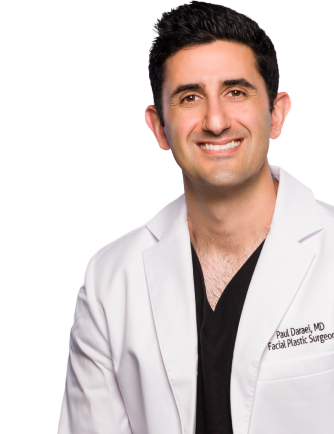










Dr. Paul Daraei is a double board-certified facial plastic surgeon recognized for his exceptional skill, academic excellence, and leadership in the field of facial aesthetics. With advanced fellowship training and thousands of surgical cases completed at Emory University, he combines technical precision with an artist’s eye for natural results. As an affiliate professor and published author in leading medical journals, Dr. Daraei continues to advance the field through teaching, research, and innovation. His commitment to excellence and patient-centered care has established him as one of Atlanta’s most trusted authorities in facial plastic and reconstructive surgery.